Engineered surface
Porcelain countertops
Engineered, the only one you can put a hot pan on.
What porcelain actually is
Porcelain slabs are clay, feldspar and silica pressed under enormous force and fired at around 1,200°C until the particles fuse into glass. It is the same process as a porcelain tile, at 10 feet long. Nothing in it is organic, which is why it is the only surface here with no resin to scorch and no calcite to etch.
Sealing
Never. Fully vitrified.
Stains
Immune. There is no porosity at all.
Acid
Unaffected.
Scratches
Mohs 7–8. The hardest surface on this page.
Heat
Best in class. A pan straight off the burner is genuinely fine.
UV
Best in class. The only one we would specify outdoors.
The honest part
What you are accepting
Two things, and the first is important. On most porcelain slabs the pattern is printed on the surface and then glazed, so it is only as deep as the print — chip the edge and you expose the body colour underneath, which is usually a plain beige or white and does not match. Full-body porcelain, where the pattern runs through the thickness, solves this and costs meaningfully more. If you are choosing porcelain, ask which one you are being quoted.
Second, porcelain slabs are thin — typically 6 to 12mm — so an edge that looks like stone has to be built by mitring two pieces together at 45 degrees and bonding them. That is careful work, and it is why a porcelain job can cost more to fabricate than the slab suggests. Porcelain is also brittle at the edges: it takes a knife happily and a dropped cast-iron pan badly.
And an aesthetic note, since it is the usual reason people rule it out: porcelain has very little visual depth. Light does not enter it the way it enters marble or quartzite, so at close range it reads as a surface rather than as a material. Some find it clean; some find it flat. Look at a sample in person before you commit.
Where it belongs
Kitchens it suits
Outdoor kitchens, sun-flooded rooms where quartz would yellow, and anyone who genuinely will not use a trivet. Also the right answer for a very large island, since porcelain slabs come longer than most stone.
Variations
Porcelain we fabricate
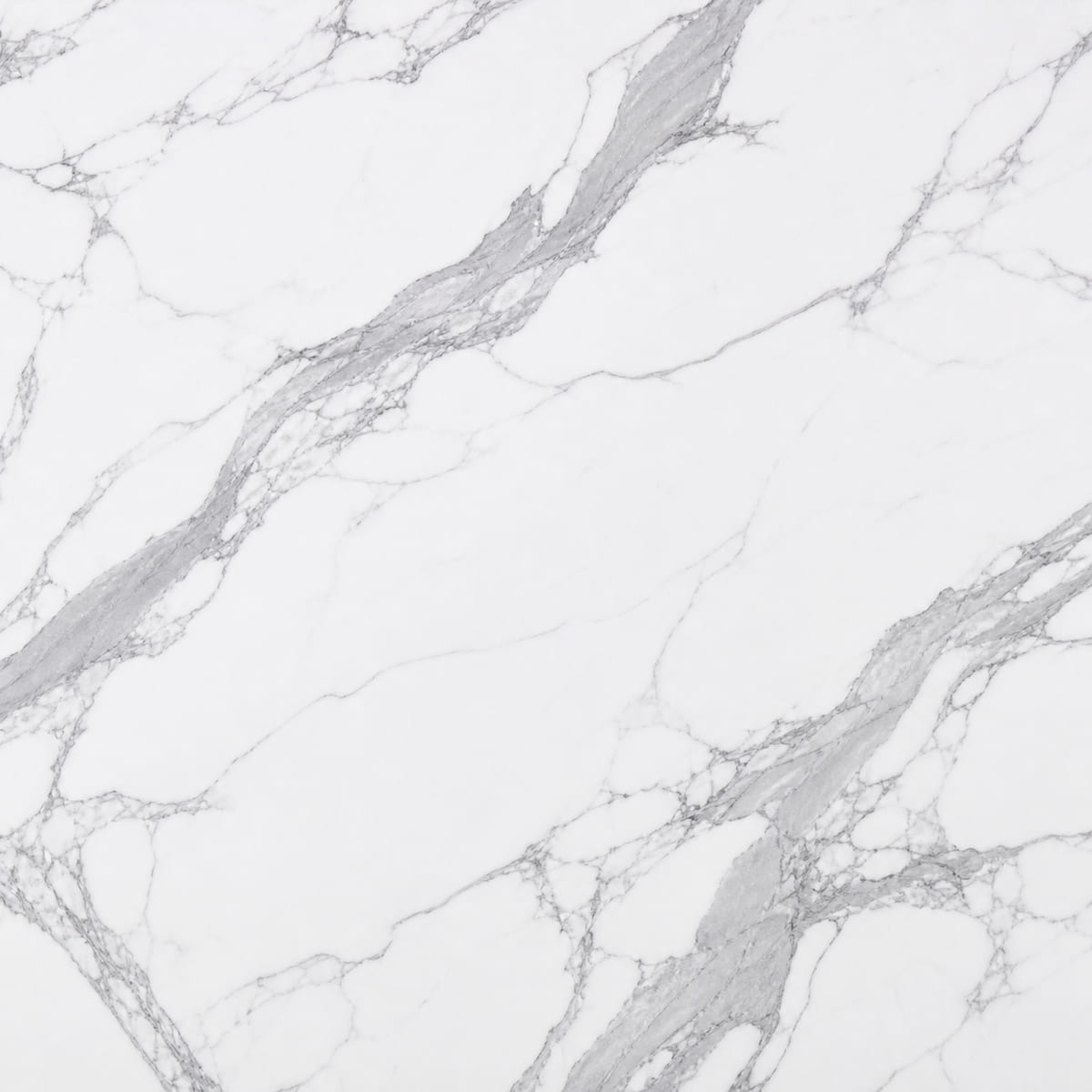
Statuario Look
Bright white with bold grey veining, in a material that will never etch. It is the most direct answer to wanting marble in a house with small children.
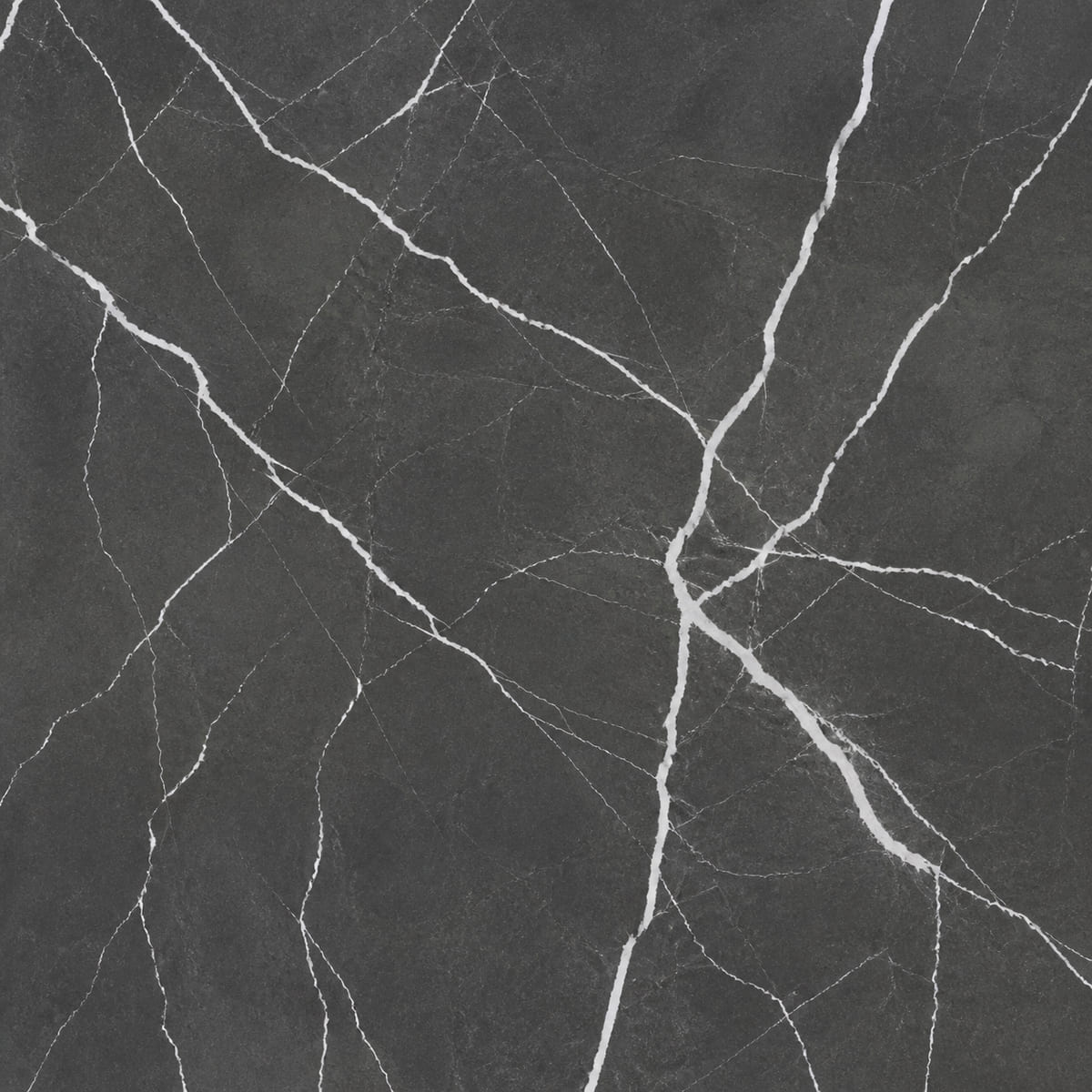
Pietra Grey Look
Charcoal with white veining that forks like lightning. Dark porcelain is the one place the flat surface quality becomes an advantage — it reads as slate rather than as a stone imitation.
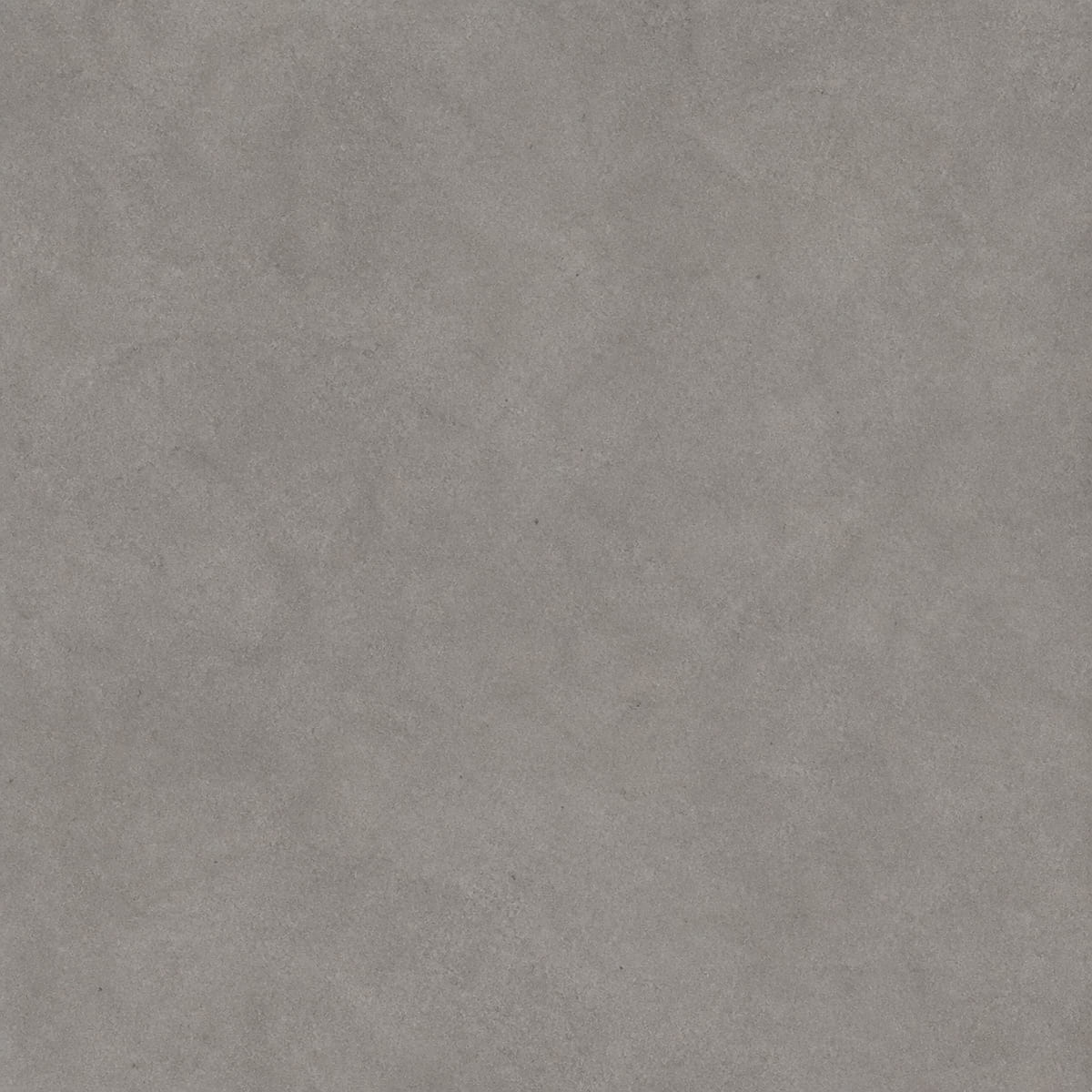
Concrete Grey
Flat mid-grey with the mottling of poured cement and nothing else. Porcelain is better at this than any other material here, because a concrete look wants exactly the flatness that hurts it elsewhere.

Nero Assoluto
Deep matte black, entirely uniform. In porcelain this stays black — no resin to yellow, no pores to hold a mark — which is the one thing a black surface usually cannot promise.
Imagery on this page is representative of the material. Patterns vary by manufacturer and production run, and we will show you the current samples before anything is ordered.
Also consider
If this is not quite right
Next step
See porcelain in person
A photograph cannot tell you how a slab moves in daylight, and no two are the same. Bring your cabinet door and a photo of the room — we will put them against the stone.