
Natural stone
Granite countertops
Natural, crystalline, the best value in real stone.
What granite actually is
Granite is magma that cooled slowly, deep underground, over a long enough period that individual crystals had room to grow. That is why you can see them: the glassy grey is quartz, the milky white or pink is feldspar, the black flecks are mica and amphibole. The pattern is not veining — it is the actual crystal structure of the rock, at the scale it formed.
Sealing
Yes, but frequency varies enormously by colour. See below.
Stains
Good when sealed. Dark granites are close to immune.
Acid
Unaffected. Granite is not carbonate.
Scratches
Mohs 6–7. You will not scratch it in normal use.
Heat
Excellent. A hot pan is genuinely fine.
Consistency
None. Slab to slab differs; view yours before it is cut.
The honest part
What you are accepting
Granite’s porosity is not one number — it is a range, and it tracks colour. Absolute Black is so dense it barely takes a sealer at all; a pale speckled granite like Kashmir White is genuinely thirsty and wants resealing every year, sometimes sooner. Ask about the specific slab, not about granite. The other honest point is aesthetic rather than technical: the busy brown-and-gold speckled granite of the mid-2000s is strongly associated with that decade, and it will date a kitchen. The granites that read as current are the quiet ones and the dramatic ones — dense blacks, leathered greys, and slabs with real movement. The middle ground is where the dated look lives.
Where it belongs
Kitchens it suits
Anyone who wants genuine natural stone without quartzite money, and anyone who puts hot pans down without thinking. Leathered black granite in particular reads as current and costs a fraction of the alternatives.
Variations
Granite we fabricate

Absolute Black
Dense, uniform, genuinely black with no pattern at all. It is so tight-grained it barely accepts a sealer, which makes it the lowest-maintenance natural stone we sell. Honed, it turns matte and modern; polished, it turns into a mirror.
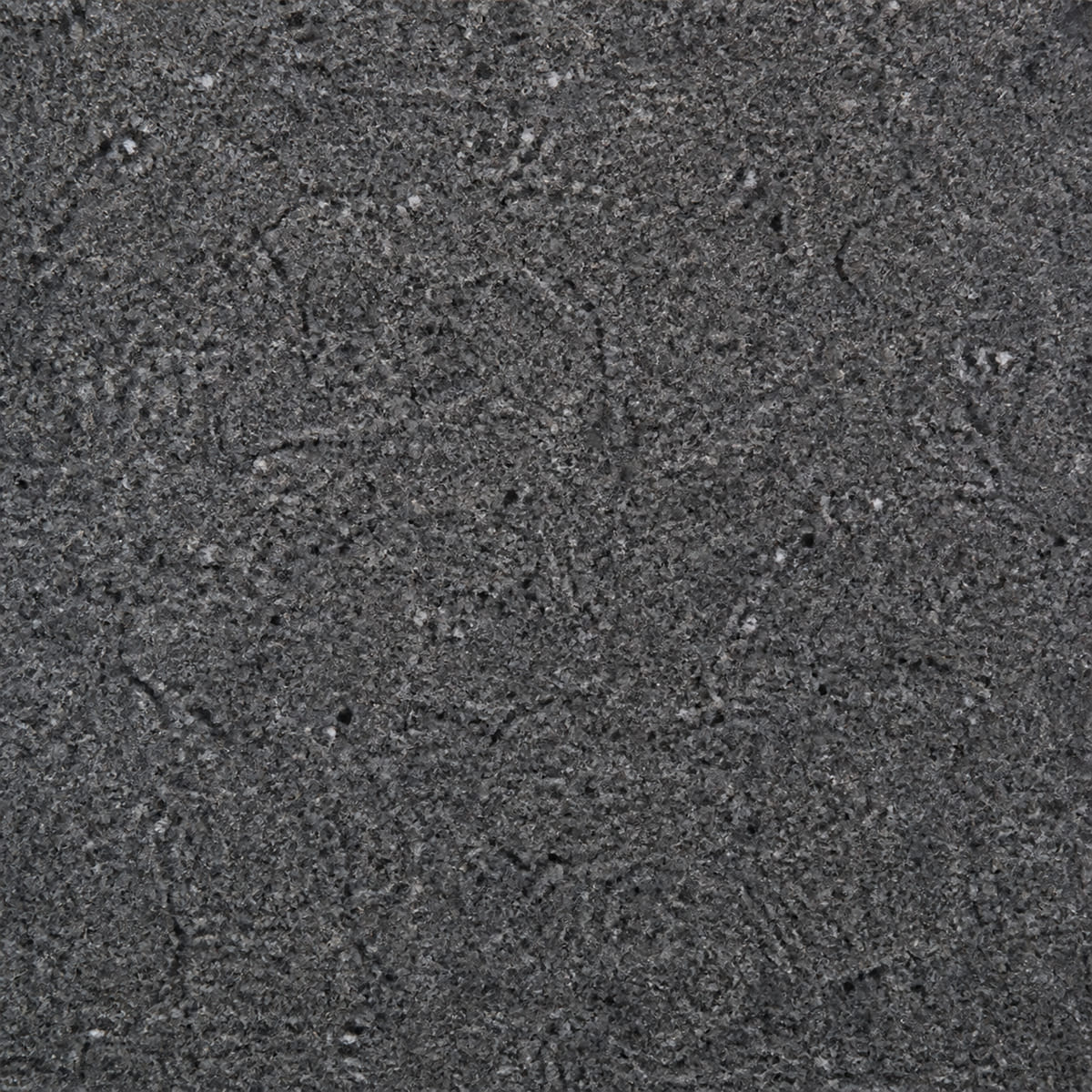
Steel Grey, Leathered
Charcoal with fine silver and pewter flecking, finished by brushing rather than polishing — so it holds a soft sheen and a faint texture instead of a shine. It hides fingerprints and water spots better than anything else here.
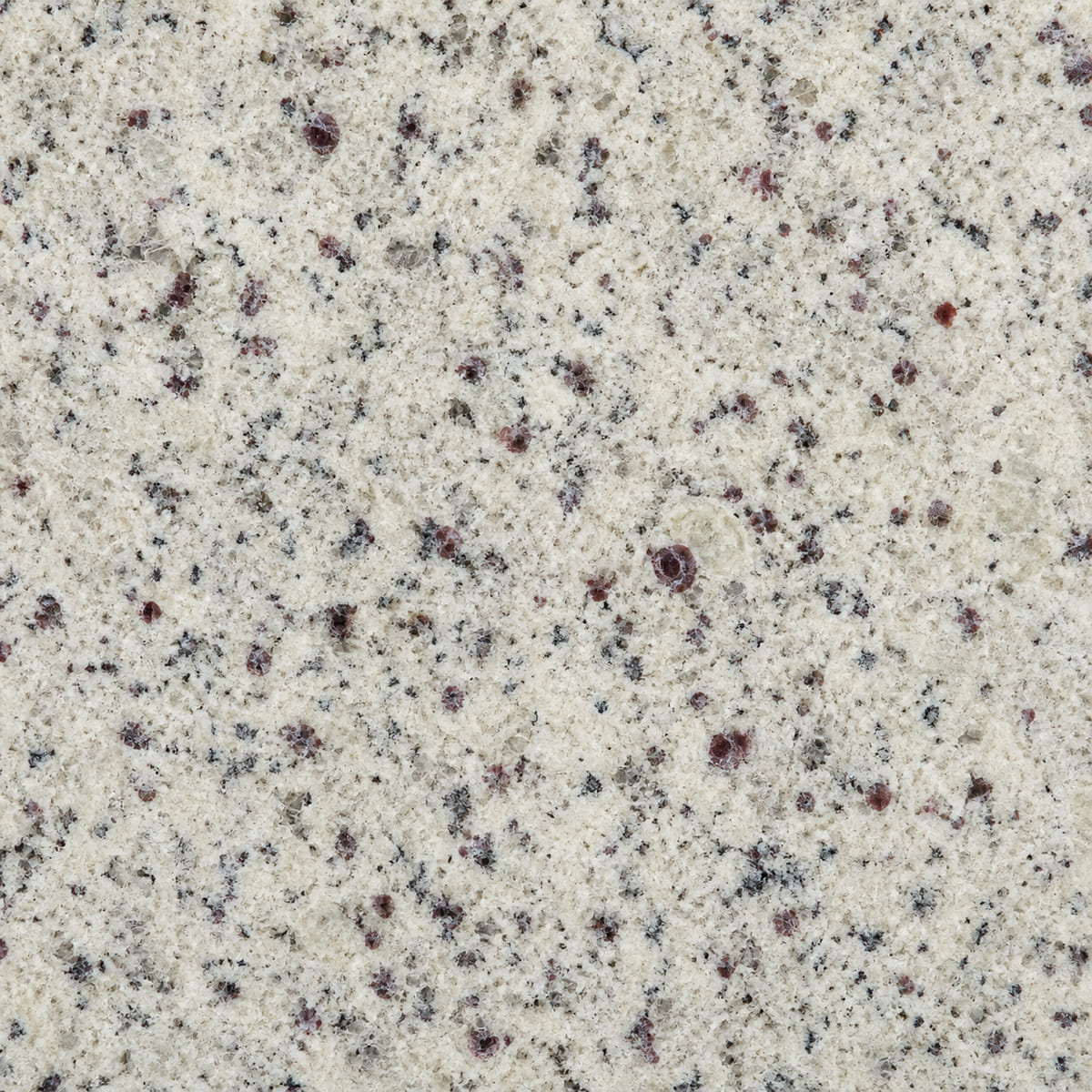
Colonial White
Pale cream-white scattered with grey and deep burgundy garnet. The garnets are the point — small dark red crystals that only show when you are close, so it reads as a quiet stone from across the room and a detailed one at the counter.
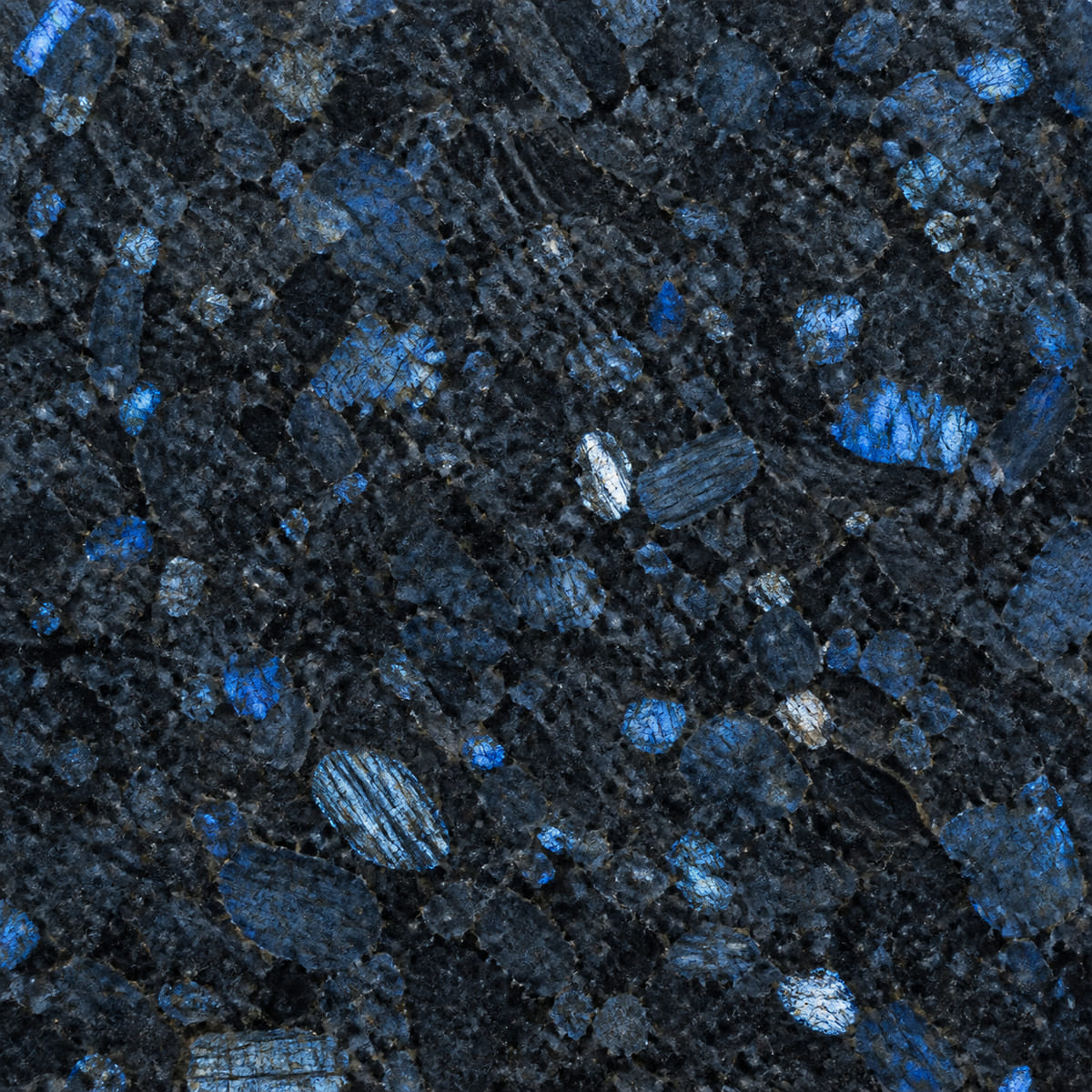
Blue Pearl
Deep blue-grey with labradorite crystals that flash electric blue as you move past them. Photographs badly and looks extraordinary in person, which is a reason to come and see it rather than choose it from a screen.
Imagery on this page is representative of the material. No two natural slabs are alike — veining, colour and movement vary from block to block, and the slab that goes into your kitchen is the one you choose in person at our shop.
Also consider
If this is not quite right
Next step
See granite in person
A photograph cannot tell you how a slab moves in daylight, and no two are the same. Bring your cabinet door and a photo of the room — we will put them against the stone.