
Natural stone
Travertine countertops
Natural, pitted, and not for a kitchen.
What travertine actually is
Travertine is limestone that formed at a hot or mineral spring. As the water surfaced, dissolved carbon dioxide came out of it — and the bubbles left voids in the rock as it set. Those voids are the characteristic pitting, and they run all the way through the stone rather than sitting on the surface. Slabs are sold either filled, with the holes grouted level, or unfilled.
Sealing
Yes, frequently, and still not sufficient for a kitchen.
Stains
Highly susceptible, and the voids trap what spills.
Acid
Etches readily. It is calcium carbonate.
Scratches
Mohs 3–4. Soft.
Heat
Good.
Texture
The pitting is the point — and the problem indoors.
The honest part
Why we will steer you elsewhere
Travertine has limestone’s softness and porosity plus one problem of its own: the holes. On a kitchen counter, unfilled travertine collects crumbs, liquid and grease in voids you cannot properly reach, which is a hygiene issue rather than an aesthetic one. Filled travertine solves that until the filler starts to pop out — which it does, at the edges first, under normal use — leaving pits that then behave like the unfilled version. Neither state is one we would put behind a sink.
Where travertine is genuinely excellent is outdoors and underfoot. It stays cool in sun, it is naturally slip-resistant unfilled, and it weathers beautifully. Patios, pool surrounds, exterior steps, fireplace surrounds and bathroom floors are all jobs it does better than most stone — and we fabricate it for those.
If it is the warm banded travertine look you want on a kitchen counter, a warm quartzite like Taj Mahal gets close and will survive the room.
Where it belongs
What it is genuinely good for
Patios, pool surrounds, exterior steps, fireplace surrounds, bathroom floors. Not kitchen work surfaces.
Variations
Travertine we fabricate
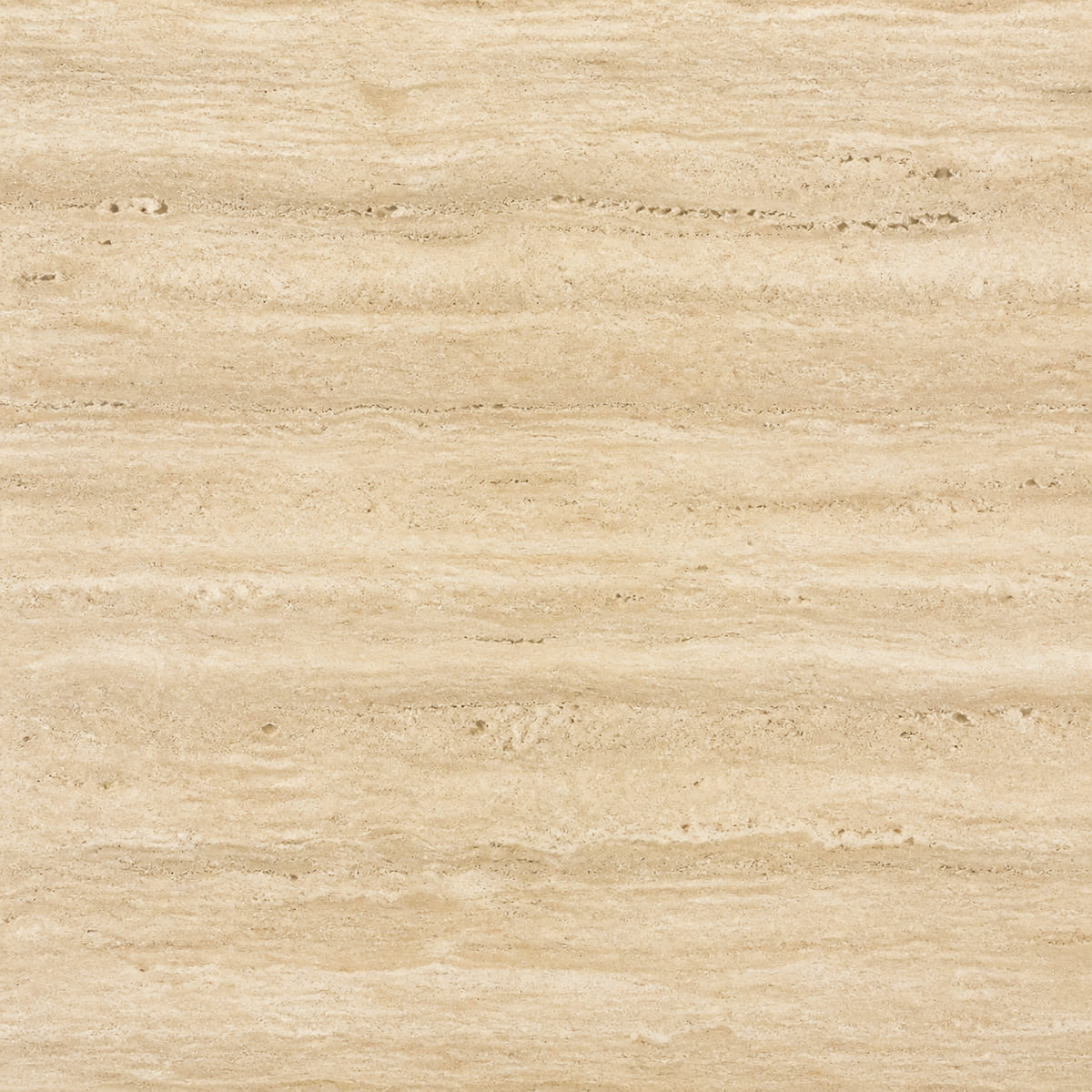
Navona, Filled
The classic warm beige with straight linear banding, holes grouted level and honed flat. This is the travertine most people picture when they hear the word.
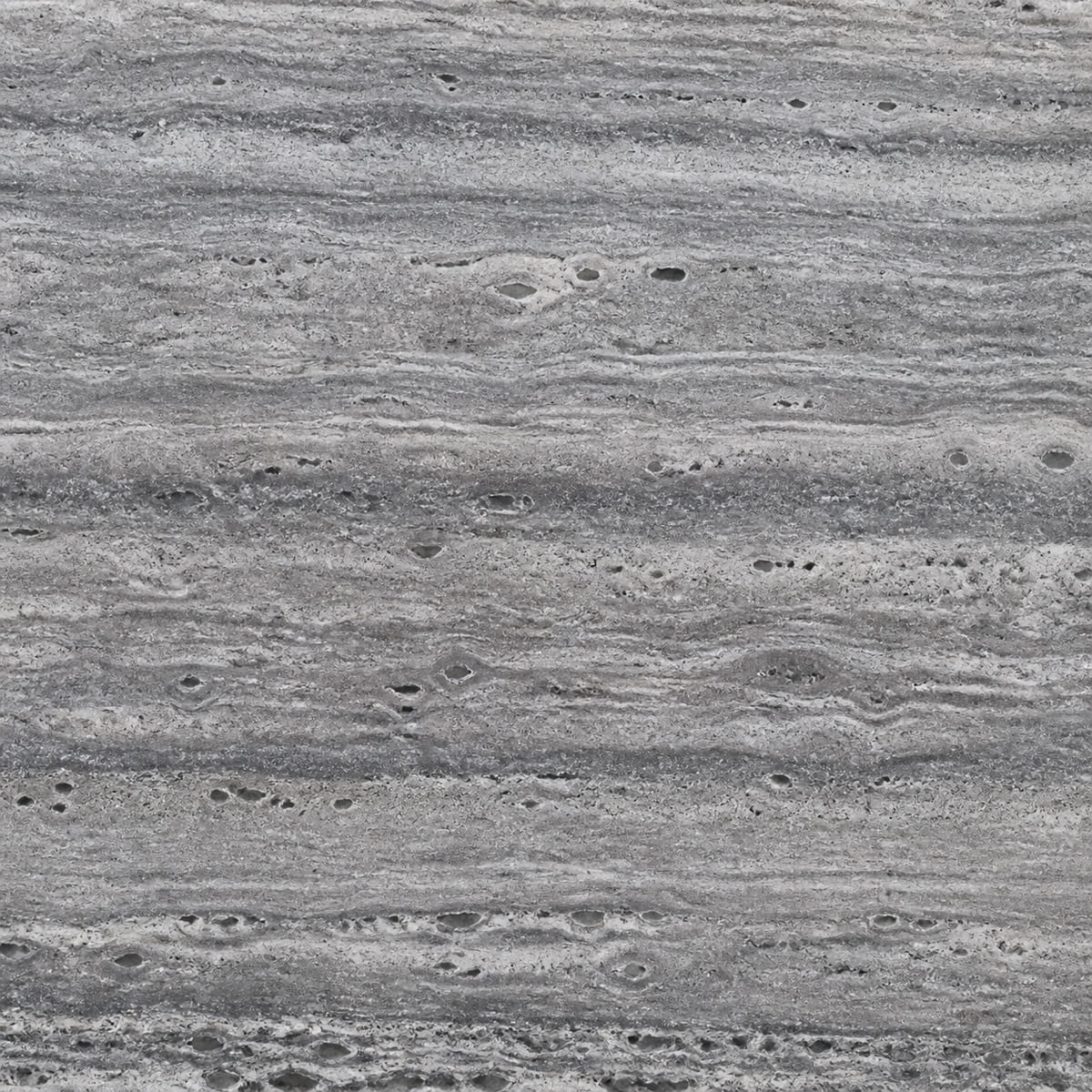
Silver Travertine
Grey and silver with strong, tightly spaced striation. Far cooler than the classic travertine palette, and the one that reads as contemporary rather than Mediterranean.
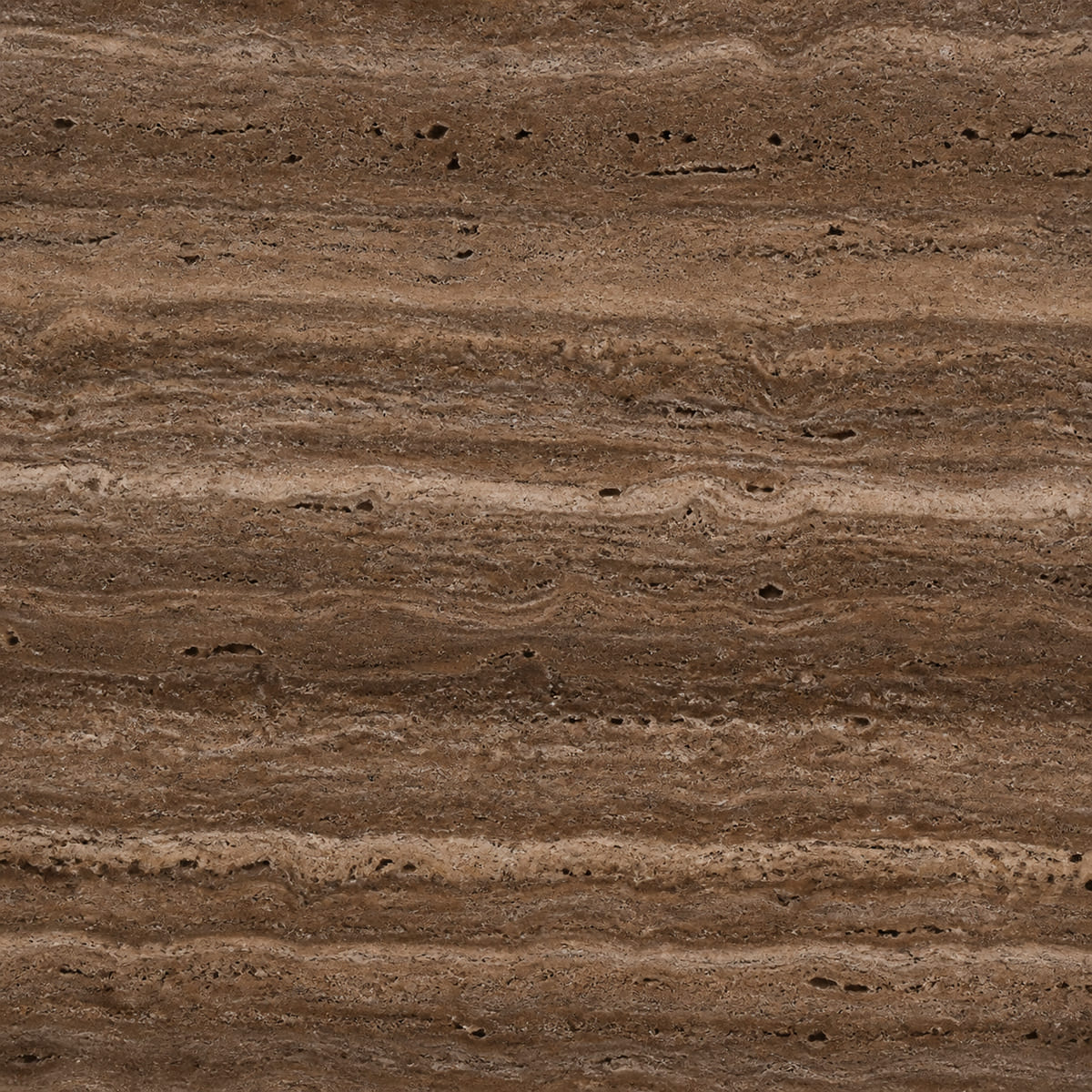
Noce
Rich walnut brown with darker banding running through it. The deepest travertine, and the one that holds up best against red brick and stained wood.
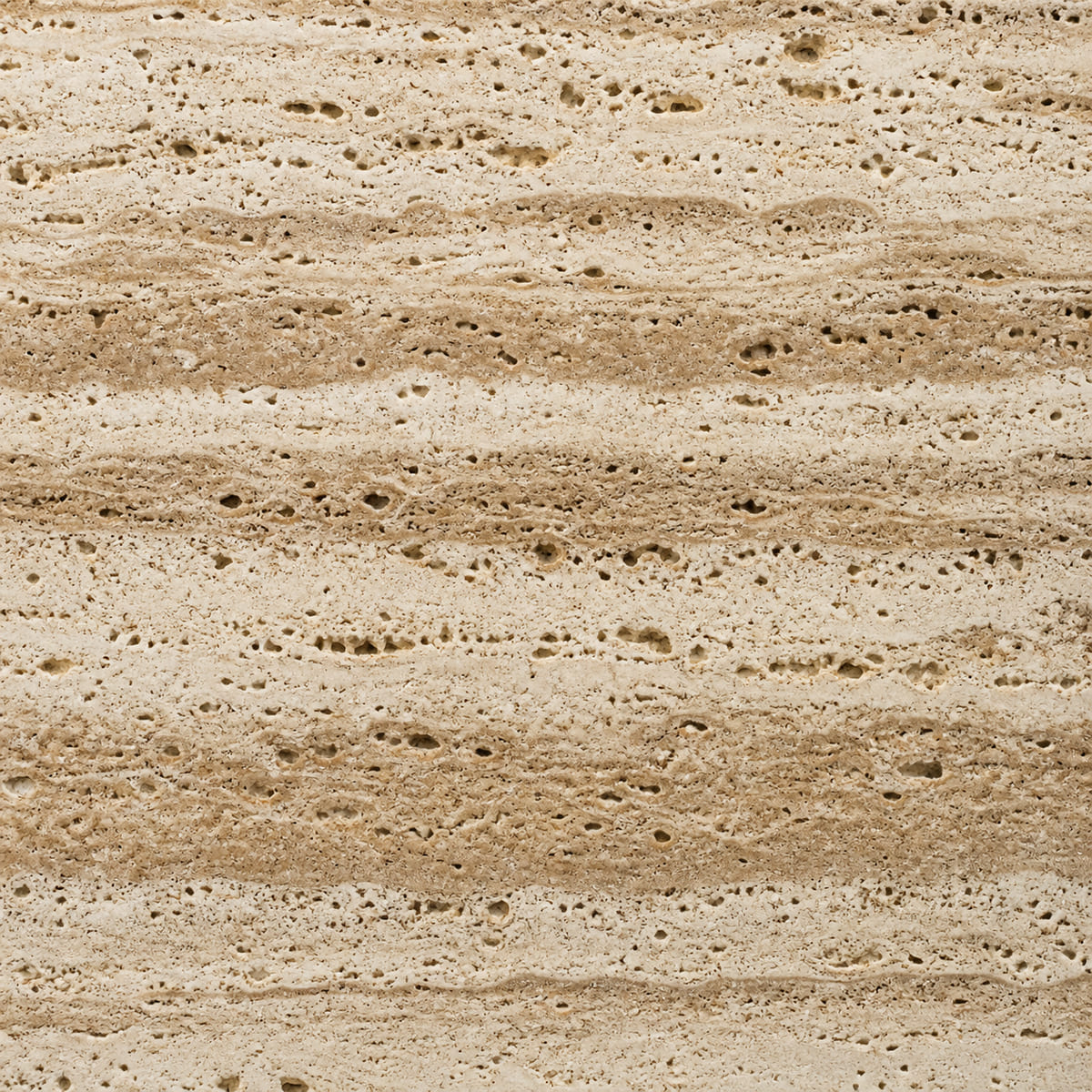
Scabas
Cream and tan banded together with more contrast and more open pitting than the others. Left unfilled it is genuinely slip-resistant, which is why it ends up around so many pools.
Imagery on this page is representative of the material. No two natural slabs are alike — veining, colour and movement vary from block to block, and the slab that goes into your kitchen is the one you choose in person at our shop.
Also consider
If this is not quite right
Next step
Tell us what you are trying to do
A photograph cannot tell you how a slab moves in daylight, and no two are the same. Bring your cabinet door and a photo of the room — we will put them against the stone.