
Natural stone
Quartzite countertops
Natural, harder than granite, looks like marble.
What quartzite actually is
Quartzite starts as sandstone. Buried, heated and compressed, the individual quartz sand grains recrystallise and fuse into a single interlocking mass — so what you get is very nearly solid quartz, with the movement and translucence of the sediment still readable in it. It is the one natural stone that looks like marble and behaves better than granite.
Sealing
Yes — annually, roughly. It is porous despite the hardness.
Stains
Resists well when sealed; oil is the one to wipe promptly.
Acid
Unaffected. It is silica, not carbonate — lemon does nothing.
Scratches
Mohs 7. Harder than a steel blade; harder than granite.
Heat
Excellent. It was made under heat and pressure.
Consistency
None. Every slab differs, sometimes dramatically.
The honest part
What you are accepting
The real risk with quartzite is not the stone, it is the label. A large share of what is sold as quartzite in the United States is actually dolomitic marble, and a soft "quartzite" will etch from a lemon exactly like marble will — after you have paid quartzite prices. Real quartzite cannot be scratched by a steel knife and does not react to acid, and those are two tests that take ten seconds on a sample. We run them. Beyond that: quartzite is often shot through with natural fissures, which are structural to the stone rather than defects but do make it slower and more demanding to fabricate. That labour is a real part of why it sits at the top of the price range.
Where it belongs
Kitchens it suits
Anyone who wants a marble look in a kitchen that actually gets cooked in. Warm palettes, brass hardware, and islands large enough to show the movement off.
Variations
Quartzite we fabricate
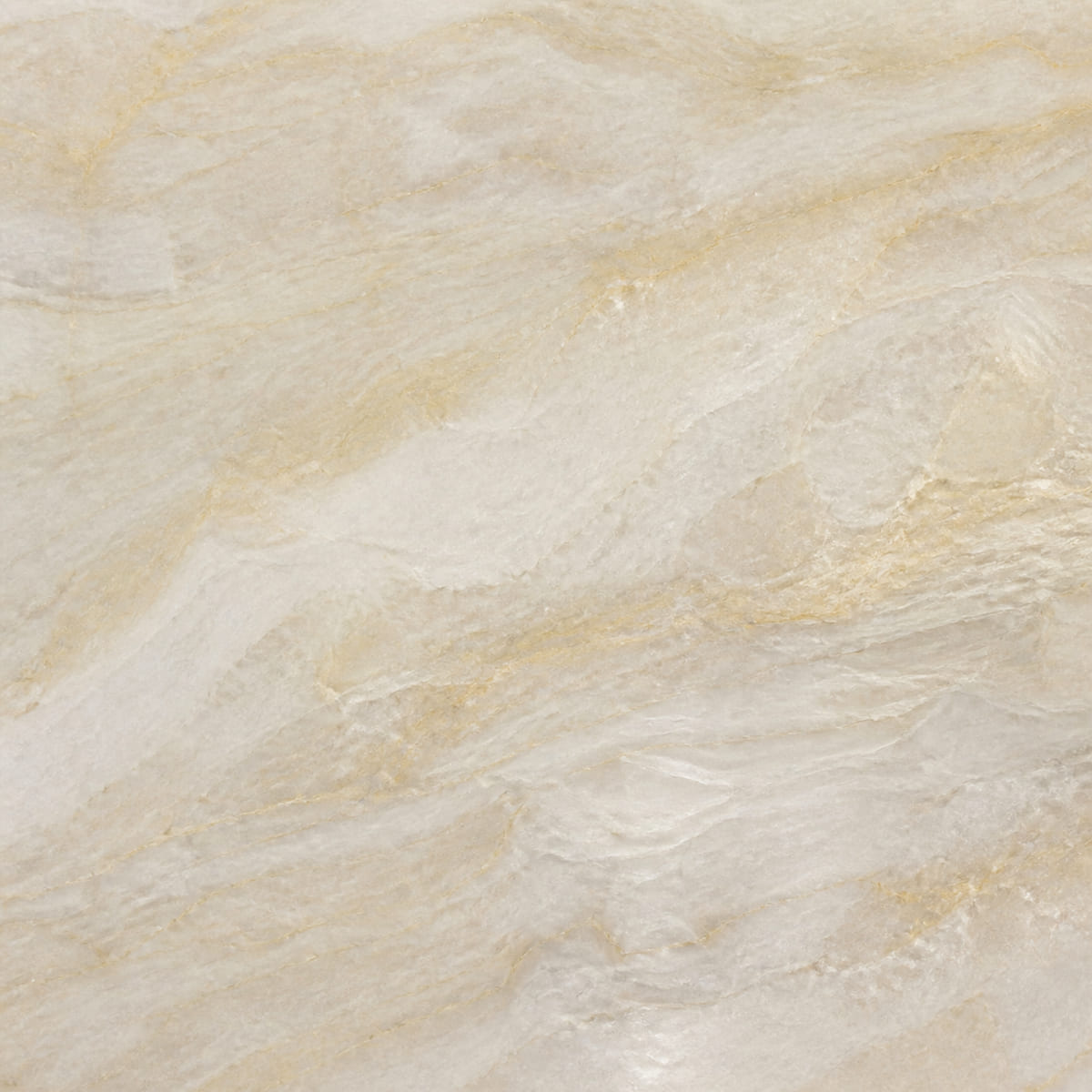
Taj Mahal
Warm cream shot through with soft honey and pale grey drift. It reads as cream in daylight and as honey under warm bulbs, which is why it works in almost every kitchen it goes into. The safest quartzite and still not a boring one.
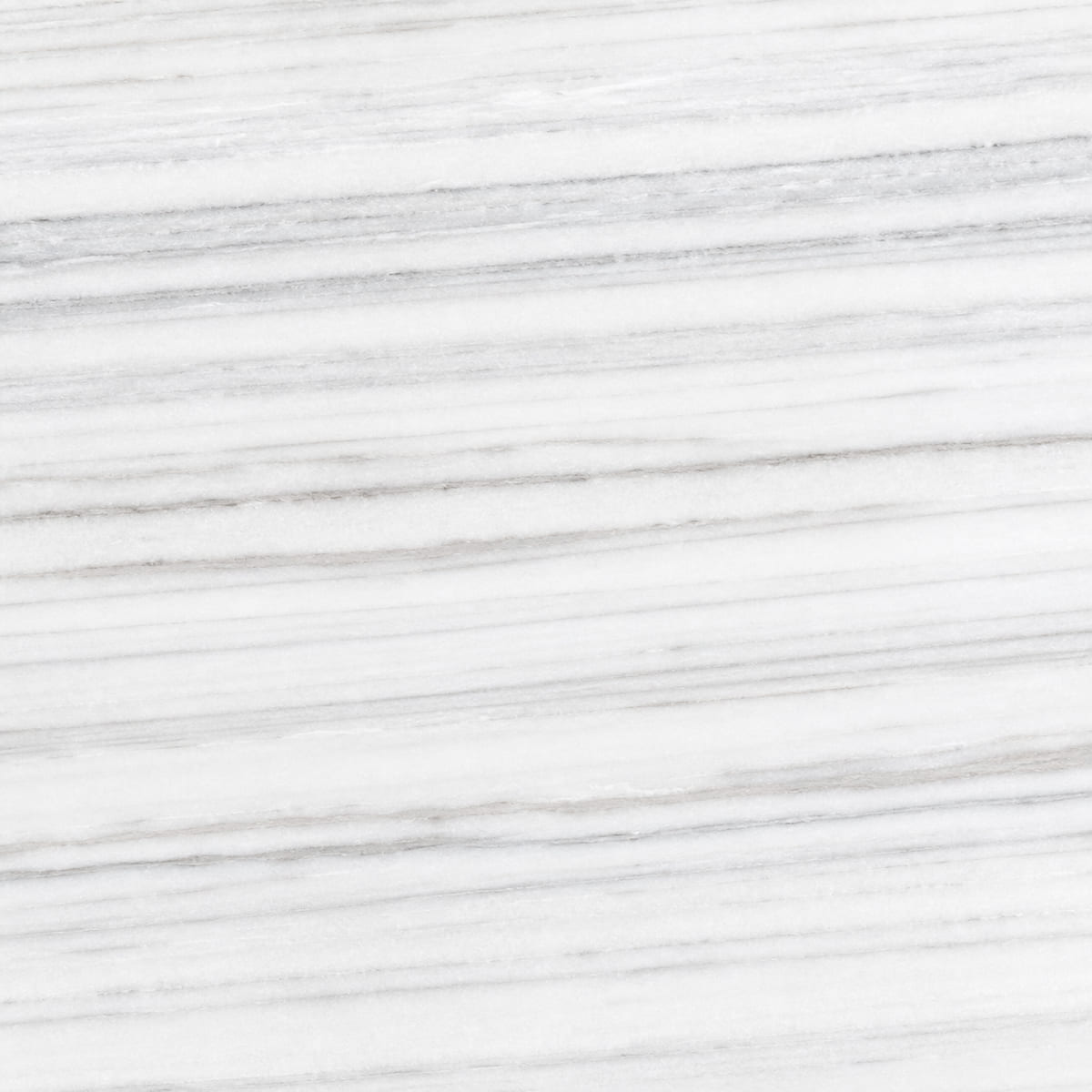
White Macaubas
A bright white ground with grey-taupe veining running in near-parallel lines rather than branching. The linearity is the whole character — it looks combed, and it makes a long run read as deliberate.
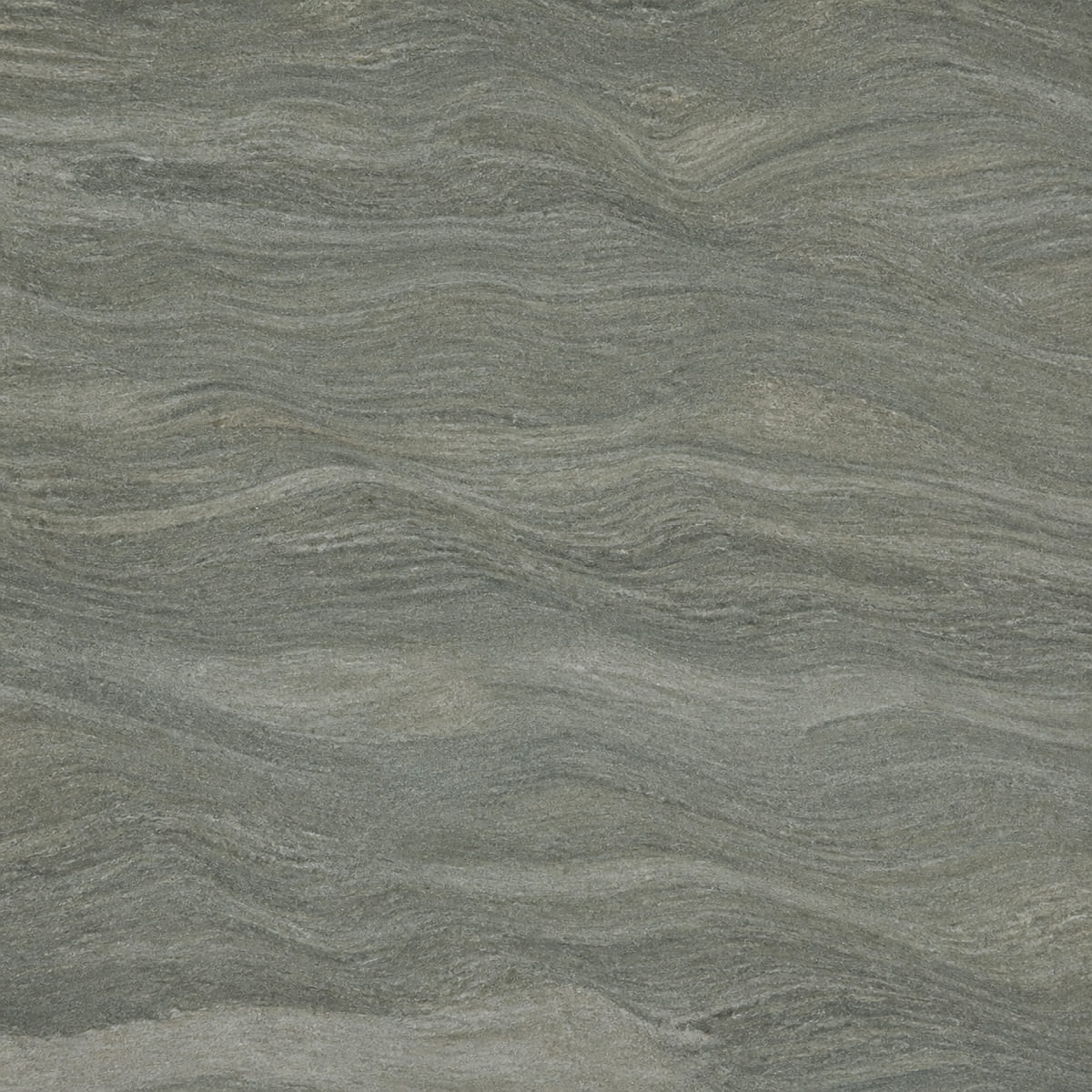
Sea Pearl
Grey-green with rippled banding that genuinely looks like a tidal flat at low water. Frequently leathered, which suppresses the shine and brings the ripple up under your hand.
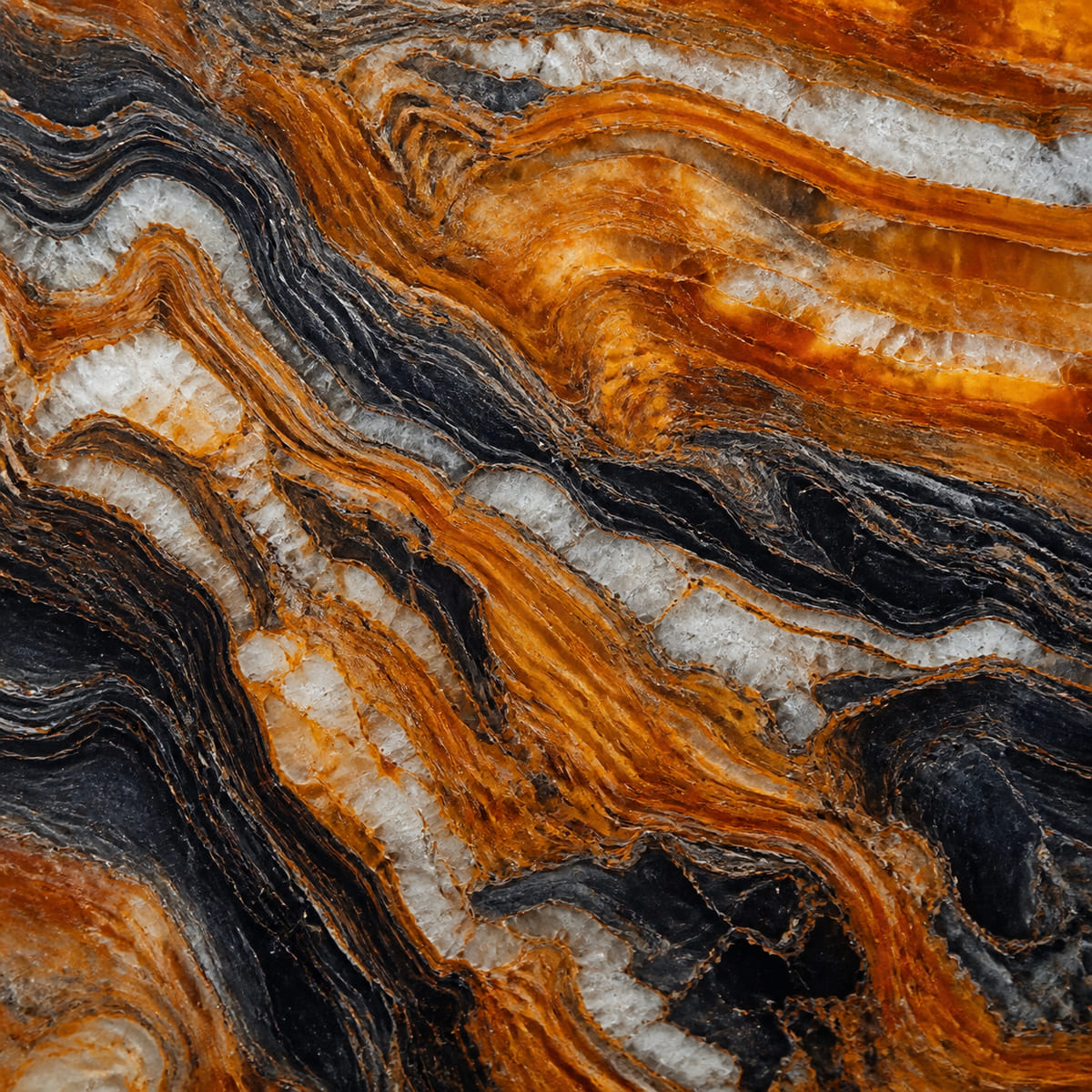
Fusion
Amber, black, rust and white folded together with no restraint at all. This is a slab you pick in person and then design the rest of the kitchen around — and it is the one most often backlit on a waterfall island.
Imagery on this page is representative of the material. No two natural slabs are alike — veining, colour and movement vary from block to block, and the slab that goes into your kitchen is the one you choose in person at our shop.
Also consider
If this is not quite right
Next step
See quartzite in person
A photograph cannot tell you how a slab moves in daylight, and no two are the same. Bring your cabinet door and a photo of the room — we will put them against the stone.