
Natural stone
Marble countertops
Natural, unmatched, and it will patina.
What marble actually is
Marble is limestone that was buried and cooked. The calcite recrystallises into a dense, slightly translucent mass, and the impurities that were dispersed through the original sediment — iron, clay, carbon — get squeezed into the seams that become veins. That translucence is why marble glows in a way no engineered surface reproduces: light enters the surface before it comes back out.
Sealing
Yes, and often. Sealing reduces staining.
Stains
Susceptible. Oil and red wine want wiping now, not later.
Acid
This is the issue. Sealing does not prevent it. See below.
Scratches
Mohs 3–4. Soft. It will pick up marks.
Heat
Genuinely good — marble handles heat well.
Consistency
None, and the variation is most of the appeal.
The honest part
What you are accepting
Marble etches, and this is the single most misunderstood thing in the countertop trade. An etch is not a stain sitting on the surface — it is acid dissolving the calcite and leaving a dull spot where the polish used to be. Lemon juice, vinegar, wine, tomato and many household cleaners all do it, in seconds, and a sealer does not stop it: a sealer blocks absorption, and etching is a surface reaction. There is no product that makes marble acid-proof, and anyone who tells you otherwise is selling something.
So the honest position is this. In a kitchen that gets used, marble will develop a patina of small dull marks, and it will do it in the first year. Some people love that — it is the look of every old bistro counter in Europe, and it stops being a worry once it is uniform. Many people hate it, and no amount of care will prevent it. Choose marble because you want the patina, not in spite of it. If you want the look without the patina, that is exactly what quartzite is for.
One practical mitigation: a honed finish has no polish to lose, so etches are far less visible on honed marble than on polished. If you are set on marble in a kitchen, hone it.
Where it belongs
Kitchens it suits
Baking counters — marble stays cool and pastry loves it. Butler’s pantries, islands in kitchens that are more beautiful than busy, and bathrooms, where nothing acidic ever happens.
Variations
Marble we fabricate
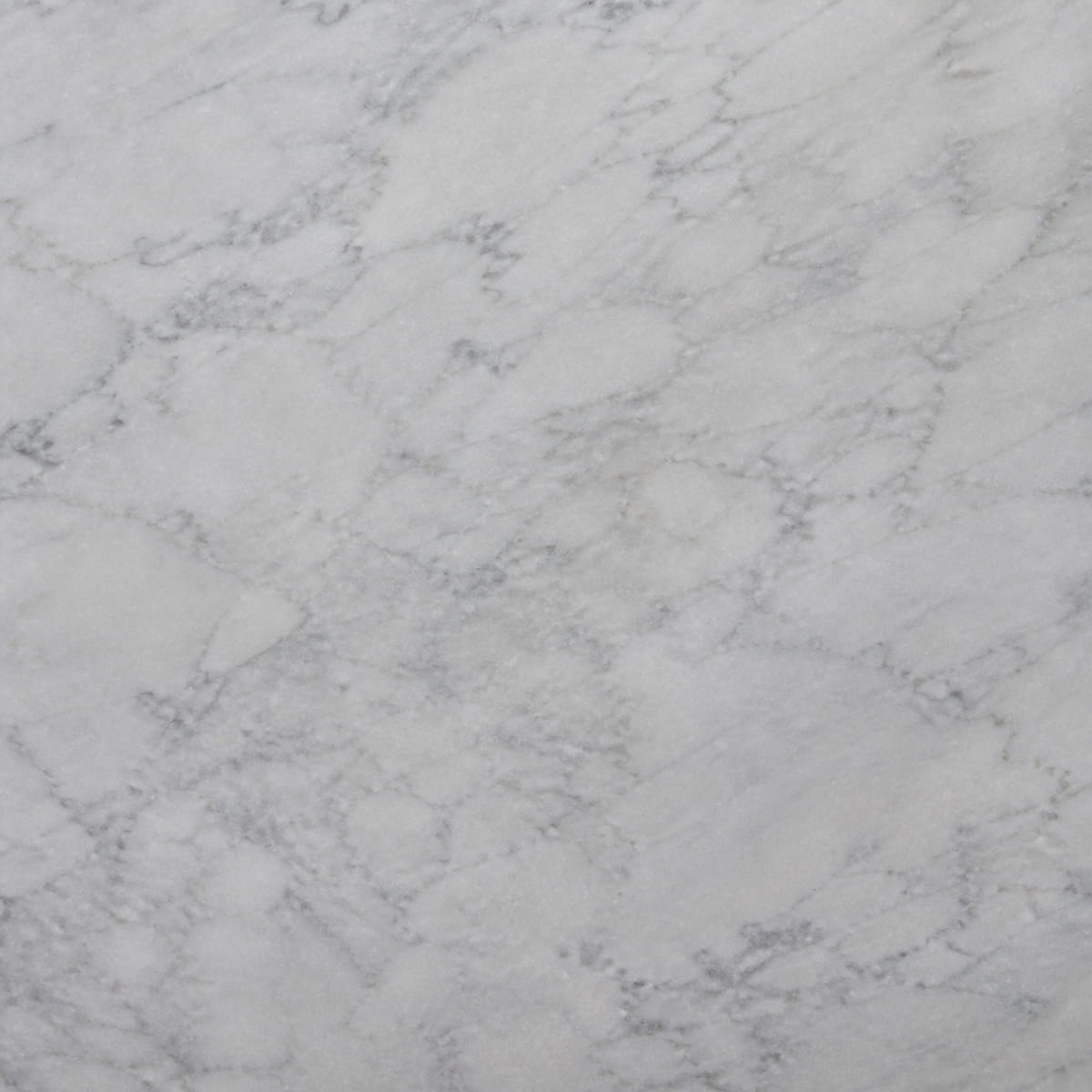
Carrara
Soft grey-white with fine, feathery, closely spaced veining — the quietest of the classic marbles and the most affordable. It never dominates a room, which is either the appeal or the disappointment depending on what you wanted.
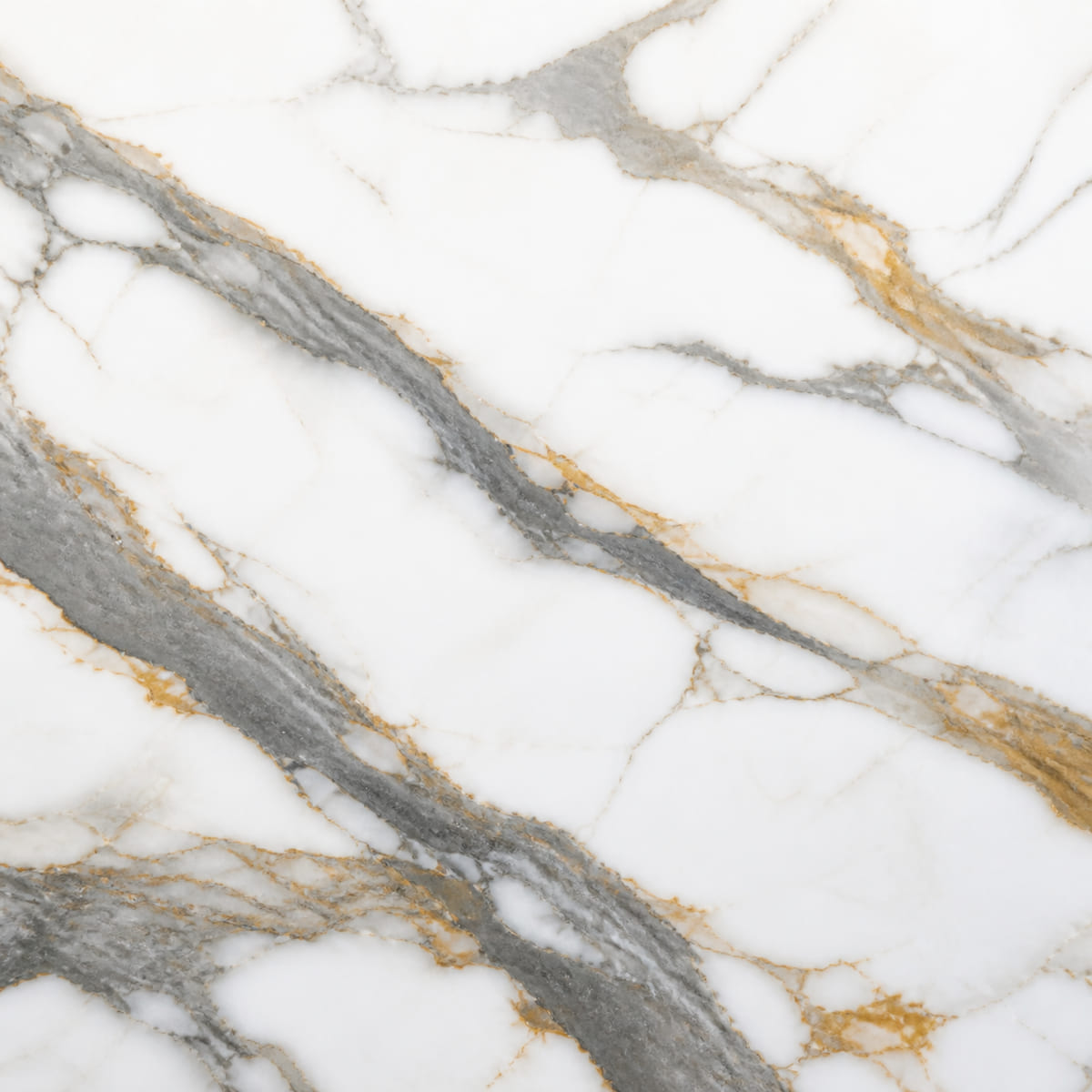
Calacatta Gold
A much whiter ground than Carrara with far bolder, more separated veining, and warm gold running alongside the grey. Fewer veins, each one doing more. The most requested marble and the most expensive.
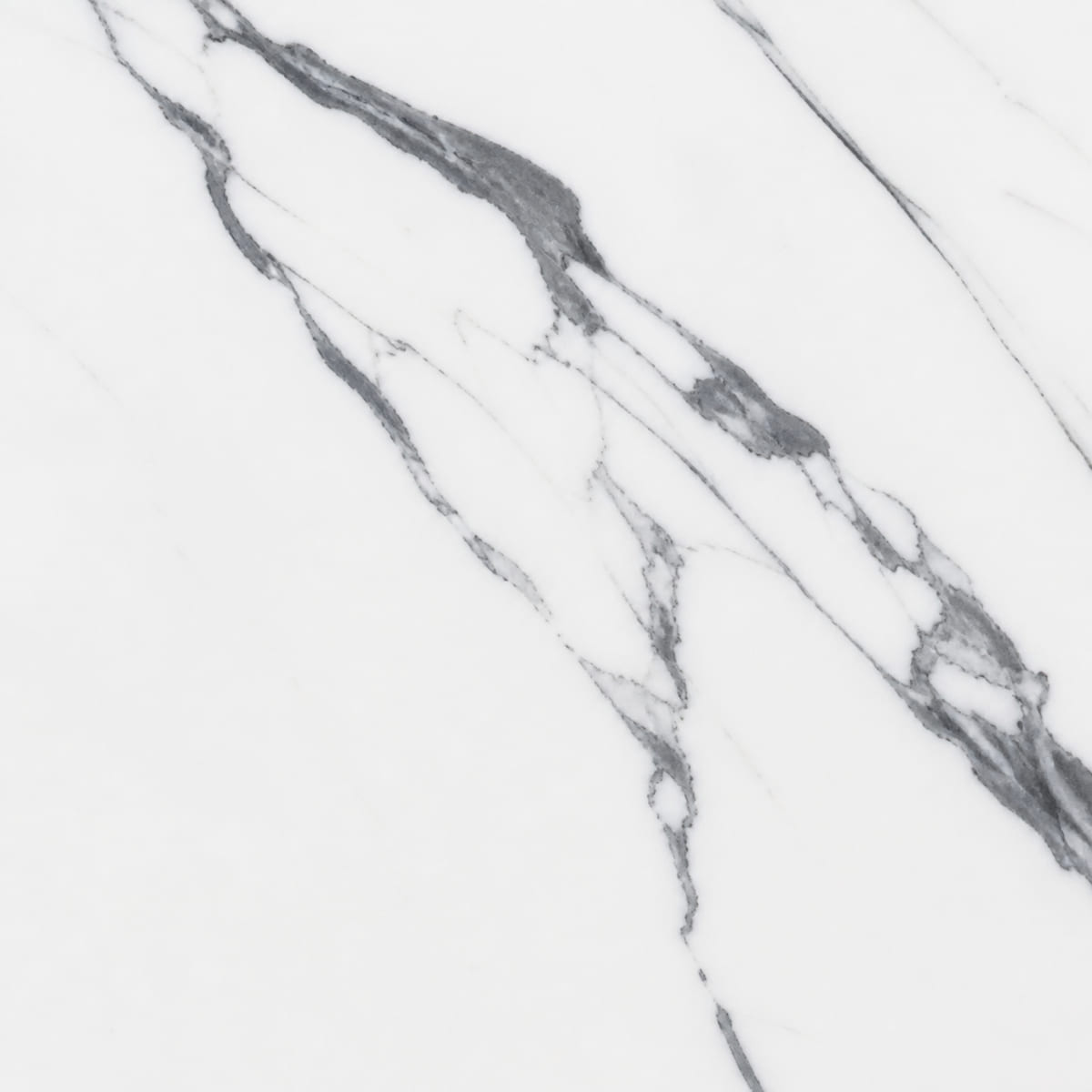
Statuario
The brightest white of the three, with sparse, decisive charcoal veining and very little else. This is the marble Renaissance sculptors used, and it is graphic in a way the others are not.
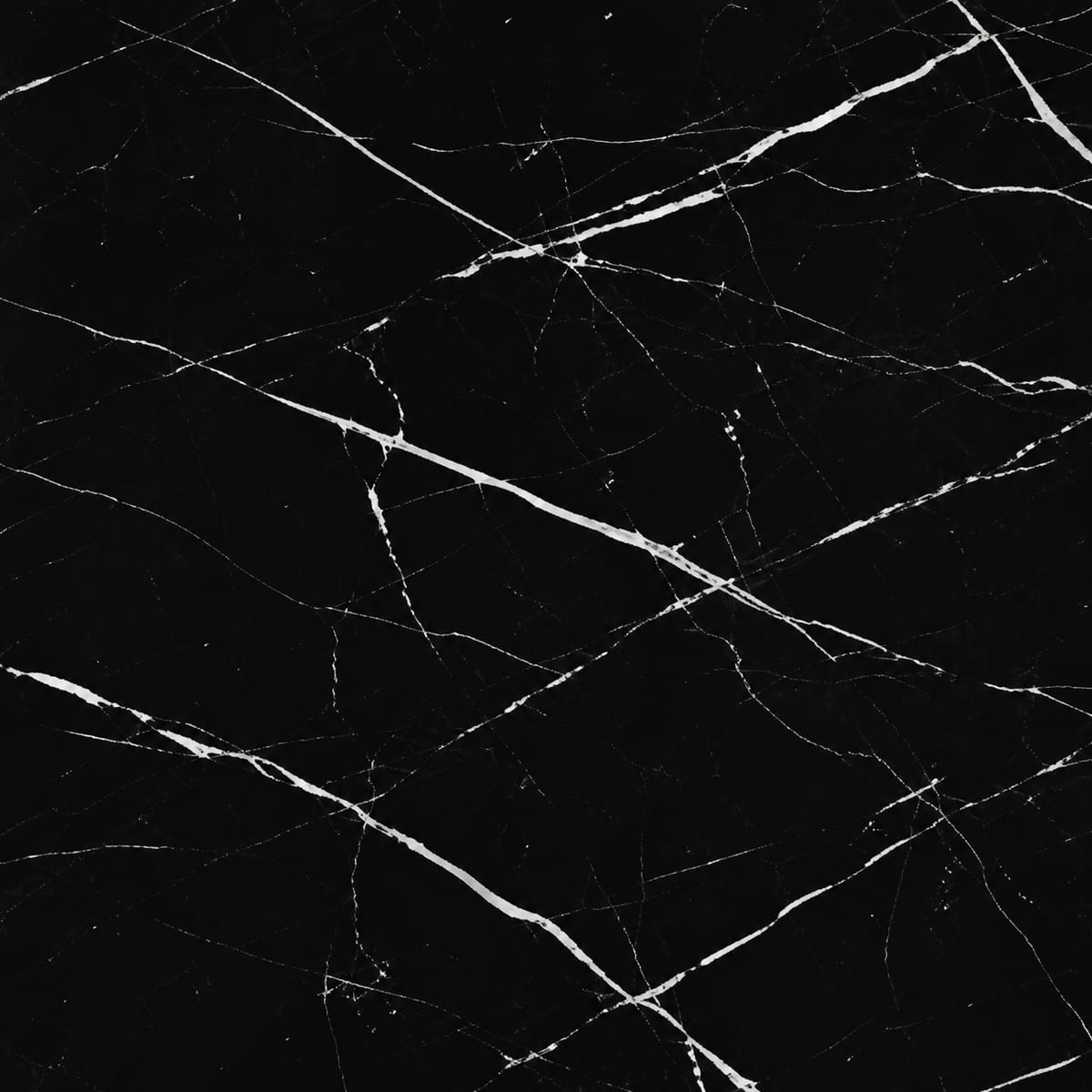
Nero Marquina
Deep black with sharp white veining that looks drawn rather than grown. Dramatic on a small surface — a bar, a powder room, an island top — and overwhelming across a whole kitchen.
Imagery on this page is representative of the material. No two natural slabs are alike — veining, colour and movement vary from block to block, and the slab that goes into your kitchen is the one you choose in person at our shop.
Also consider
If this is not quite right
Next step
See marble in person
A photograph cannot tell you how a slab moves in daylight, and no two are the same. Bring your cabinet door and a photo of the room — we will put them against the stone.