
Natural stone
Limestone countertops
Natural, soft, and not for a kitchen.
What limestone actually is
Limestone is compressed marine sediment — the shells and skeletons of sea creatures, settled and cemented over millions of years and never subjected to the heat that would have turned it into marble. That is why fossils are often visible in it, and why it is so much softer than the stone it would eventually become.
Sealing
Yes, frequently, and it is still not enough for a kitchen.
Stains
Highly susceptible. Oil marks it quickly and permanently.
Acid
Etches readily. It is calcium carbonate.
Scratches
Mohs 3–4. Soft.
Heat
Good.
Texture
Fine, matte, and warm to the hand. This is its real appeal.
The honest part
Why we will steer you elsewhere
We will not recommend limestone as a kitchen countertop, and we would rather say that here than after it is installed. It is soft, it is highly porous, it etches from anything acidic, and unlike marble it does not have the density to take a polish that hides wear. A limestone kitchen counter will show oil marks around the range and dull rings around anything you set on it, within months, and neither is reversible.
That is not a criticism of the stone — it is a criticism of the application. Limestone is beautiful, and its matte, chalky, uniform surface does something no harder stone does. Put it where nothing acidic happens: a fireplace surround, a powder-room vanity, a hearth, exterior sills and steps. We fabricate it happily for all of those.
If what draws you to limestone is the soft matte uniformity, the kitchen-appropriate version of that is honed quartzite or a matte porcelain — and we would rather sell you one of those than a countertop you will resent.
Where it belongs
What it is genuinely good for
Fireplace surrounds, hearths, powder-room vanities, exterior sills and stair treads. Not kitchen work surfaces.
Variations
Limestone we fabricate
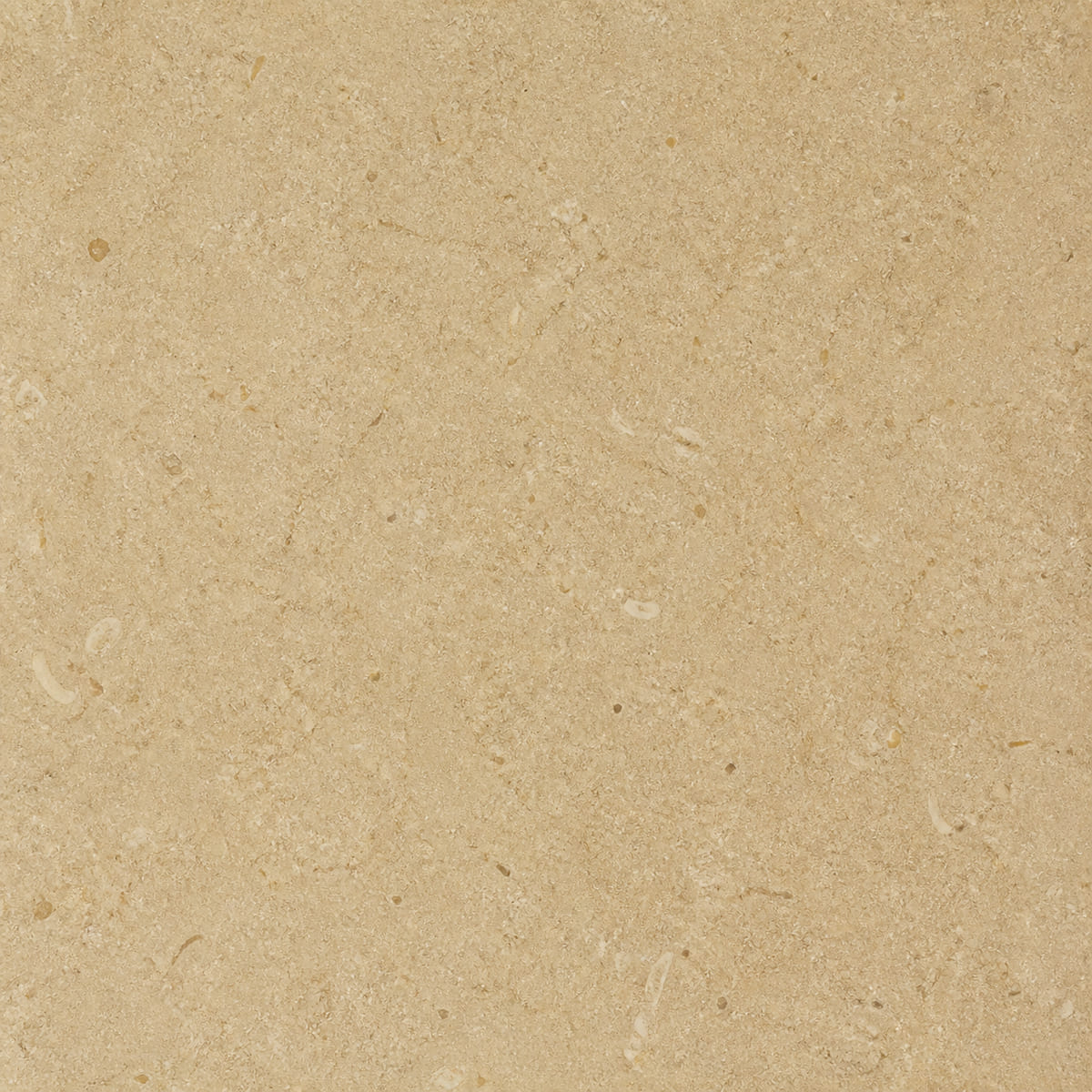
Jerusalem Gold
Warm honey-beige with visible fossil fragments scattered through it. The fossils are the reason to choose it — it is a stone that is legibly made of something.

Moleanos Blue
Pale blue-grey with an extremely fine, even grain and almost no pattern. Cool where most limestone is warm, and the most contemporary-looking of the four.
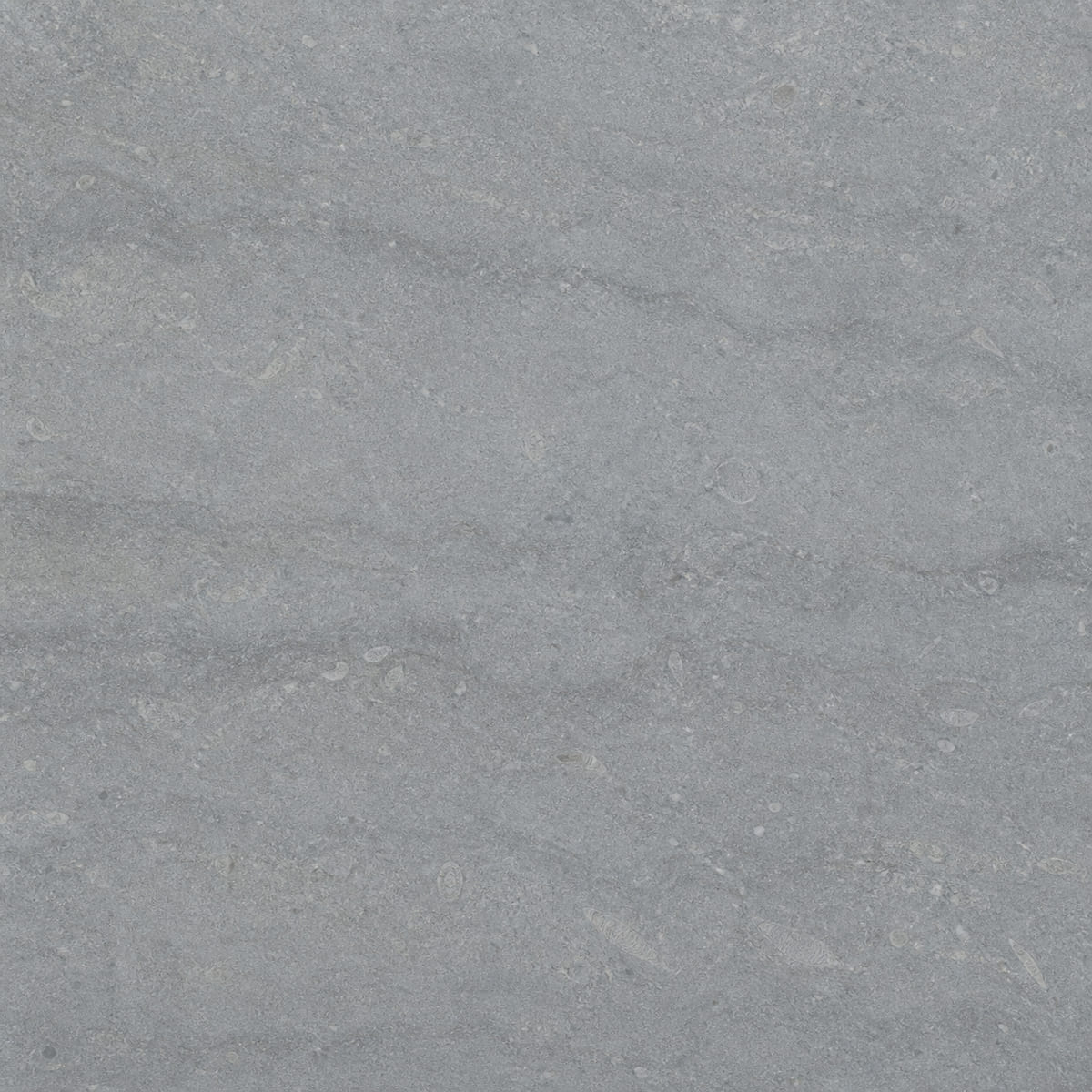
Lagos Azul
Grey-blue with subtle shell fossils and faint darker banding. It reads almost as concrete from a distance, and reveals itself as sedimentary up close.

Crema Europa
Soft uniform cream with almost no visible structure. The plainest stone in the whole catalogue, which for a fireplace surround is precisely the job.
Imagery on this page is representative of the material. No two natural slabs are alike — veining, colour and movement vary from block to block, and the slab that goes into your kitchen is the one you choose in person at our shop.
Also consider
If this is not quite right
Next step
Tell us what you are trying to do
A photograph cannot tell you how a slab moves in daylight, and no two are the same. Bring your cabinet door and a photo of the room — we will put them against the stone.